Scott Adam's experience at college resembles my own, to a certain extent. I also went to a relatively small college -- Trinity in Dublin, where the entire arts and humanities undergrad student body was under 2,000 students, I believe -- and I also found ways of being enterprising both in my studies -- I carved out a degree in Italian medieval history where there was none offered -- and in the societies I joined. I had a great time of it, as well.
I am looking forward to my next degree!!!! This is going to be fuuuun!!!! A lot of work, I'm sure... but FUN work!!! I hope RSM kicks my ass to an appropriate degree.
21 April, 2011


Our true homes -- Our forests -- 2011 International Year of the Forests
I've always felt most at home in forests and jungles.
The forests in my grandparents' home in Temagami were especially bountiful and special for me as a child and a teenager, as were the jungles in Malaysia near the Mariposa river where my father took me as a child. I've seen wolves, bears, deer, moose, elephant (Asian), ourgan-outang, tapir, snakes of every sort, leeches, all kinds of crazy birds, and who knows what else, all in the wild, all in their natural habitats.
For me, what makes a place special is running water, flowing water, water in movement. This means that the water will taste fresh, and that other animals will come to drink it, eventually. So it is a place to sit, drink, eat, wash, and play.
I wish to keep our forests as intact as possible, so that other children can find themselves, find each other, play and grow.
The forests in my grandparents' home in Temagami were especially bountiful and special for me as a child and a teenager, as were the jungles in Malaysia near the Mariposa river where my father took me as a child. I've seen wolves, bears, deer, moose, elephant (Asian), ourgan-outang, tapir, snakes of every sort, leeches, all kinds of crazy birds, and who knows what else, all in the wild, all in their natural habitats.
For me, what makes a place special is running water, flowing water, water in movement. This means that the water will taste fresh, and that other animals will come to drink it, eventually. So it is a place to sit, drink, eat, wash, and play.
I wish to keep our forests as intact as possible, so that other children can find themselves, find each other, play and grow.
18 April, 2011
Alarmism or reality?
The president of the World Bank has warned that the world is "one shock away from a full-blown crisis".
Robert Zoellick cited rising food prices as the main threat to poor nations who risk "losing a generation".
He was speaking in Washington at the end of the spring meetings of the World Bank and International Monetary Fund.
Meanwhile, G20 finance chiefs, who also met in Washington, pledged financial support to help new governments in the Middle East and North Africa.
Mr Zoellick said such support was vital.
"The crisis in the Middle East and North Africa underscores how we need to put the conclusions from our latest world development report into practice. The report highlighted the importance of citizen security, justice and jobs," he said.
Robert Zoellick cited rising food prices as the main threat to poor nations who risk "losing a generation".
He was speaking in Washington at the end of the spring meetings of the World Bank and International Monetary Fund.
Meanwhile, G20 finance chiefs, who also met in Washington, pledged financial support to help new governments in the Middle East and North Africa.
Mr Zoellick said such support was vital.
"The crisis in the Middle East and North Africa underscores how we need to put the conclusions from our latest world development report into practice. The report highlighted the importance of citizen security, justice and jobs," he said.
Cultural evolution, not the brain, drives language development
I love it when general theories are debunked!
From the BBC:
Modern phylogenetics studies look at variations in animals that are known to be related, and from those can work out when specific structures evolved.
For their studies, the team studied the characteristics of word order in four language families: Indo-European, Uto-Aztec, Bantu and Austronesian.
They considered whether what we call prepositions occur before or after a noun ("in the boat" versus "the boat in") and how the word order of subject and object work out in either case ("I put the dog in the boat" versus "I the dog put the canoe in").
The method starts by making use of well-established linguistic data on words and grammar within these language families, and building "family trees" of those languages.
"Once we have those trees we look at distribution of these different word order features over the descendant languages, and build evolutionary models for what's most likely to produce the diversity that we observe in the world," Dr Dunn said.
Pea plants in a greenhouse The methods use inference in a similar way to Mendel's studies of pea plants
The models revealed that while different language structures in the family tree could be seen to evolve along the branches, just how and when they evolved depended on which branch they were on.
"We show that each of these language families evolves according to its own set of rules, not according to a universal set of rules," Dr Dunn explained.
The Economist's take on the subject:
http://www.economist.com/node/18557572
From the BBC:
Modern phylogenetics studies look at variations in animals that are known to be related, and from those can work out when specific structures evolved.
For their studies, the team studied the characteristics of word order in four language families: Indo-European, Uto-Aztec, Bantu and Austronesian.
They considered whether what we call prepositions occur before or after a noun ("in the boat" versus "the boat in") and how the word order of subject and object work out in either case ("I put the dog in the boat" versus "I the dog put the canoe in").
The method starts by making use of well-established linguistic data on words and grammar within these language families, and building "family trees" of those languages.
"Once we have those trees we look at distribution of these different word order features over the descendant languages, and build evolutionary models for what's most likely to produce the diversity that we observe in the world," Dr Dunn said.
Pea plants in a greenhouse The methods use inference in a similar way to Mendel's studies of pea plants
The models revealed that while different language structures in the family tree could be seen to evolve along the branches, just how and when they evolved depended on which branch they were on.
"We show that each of these language families evolves according to its own set of rules, not according to a universal set of rules," Dr Dunn explained.
The Economist's take on the subject:
http://www.economist.com/node/18557572
14 April, 2011
25,000 Acts of Green initiative at RSM
Inspired by the "Billion Acts of Green©" campaign of the 'Earth Day Network', a yearly returning world wide day.
The "25,000 Acts of Green" is a local initiative of the Erasmus University initiated by GreenEUR and her Chairman of the Advisory Board, Ingrid de Vries. Our mission is to inspire students and to make the Erasmus University Sustainable, step by step.
Right on!!! I think I picked the right business school.
The "25,000 Acts of Green" is a local initiative of the Erasmus University initiated by GreenEUR and her Chairman of the Advisory Board, Ingrid de Vries. Our mission is to inspire students and to make the Erasmus University Sustainable, step by step.
Right on!!! I think I picked the right business school.
Economist article about business needing more artists
This bodes well for me, as an "artist" who wants to get in to RSM B-school.
ARTISTS routinely deride businesspeople as money-obsessed bores. Or worse. Every time Hollywood depicts an industry, it depicts a conspiracy of knaves. Think of “Wall Street” (which damned finance), “The Constant Gardener” (drug firms), “Super Size Me” (fast food), “The Social Network” (Facebook) or “The Player” (Hollywood itself). Artistic critiques of business are sometimes precise and well-targeted, as in Lucy Prebble’s play “Enron”. But often they are not, as those who endured Michael Moore’s “Capitalism: A Love Story” can attest.
Many businesspeople, for their part, assume that artists are a bunch of pretentious wastrels. Bosses may stick a few modernist daubs on their boardroom walls. They may go on corporate jollies to the opera. They may even write the odd cheque to support their wives’ bearded friends. But they seldom take the arts seriously as a source of inspiration.
The bias starts at business school, where “hard” things such as numbers and case studies rule. It is reinforced by everyday experience. Bosses constantly remind their underlings that if you can’t count it, it doesn’t count. Quarterly results impress the stockmarket; little else does.
To read on, click the link above.
ARTISTS routinely deride businesspeople as money-obsessed bores. Or worse. Every time Hollywood depicts an industry, it depicts a conspiracy of knaves. Think of “Wall Street” (which damned finance), “The Constant Gardener” (drug firms), “Super Size Me” (fast food), “The Social Network” (Facebook) or “The Player” (Hollywood itself). Artistic critiques of business are sometimes precise and well-targeted, as in Lucy Prebble’s play “Enron”. But often they are not, as those who endured Michael Moore’s “Capitalism: A Love Story” can attest.
Many businesspeople, for their part, assume that artists are a bunch of pretentious wastrels. Bosses may stick a few modernist daubs on their boardroom walls. They may go on corporate jollies to the opera. They may even write the odd cheque to support their wives’ bearded friends. But they seldom take the arts seriously as a source of inspiration.
The bias starts at business school, where “hard” things such as numbers and case studies rule. It is reinforced by everyday experience. Bosses constantly remind their underlings that if you can’t count it, it doesn’t count. Quarterly results impress the stockmarket; little else does.
To read on, click the link above.
12 April, 2011
Interesting paper: The Exiled
Info about Russian news, with a sense of humour.
Should inspect it more in the future. In the meantime... Spam spam spam. ;)
Should inspect it more in the future. In the meantime... Spam spam spam. ;)
Hypocracy cubed
Wow, this woman really takes the cake.
I think it is exemplary of what is happening in the US and other parts of the world right now.
I think we will look back at this period of history and be amazed.
It's time to take a stand, methinks.
I think it is exemplary of what is happening in the US and other parts of the world right now.
I think we will look back at this period of history and be amazed.
It's time to take a stand, methinks.
King Crabs Invade Antarctica
It’s like a scene out of a sci-fi movie – thousands, possibly millions, of king crabs are marching through icy deep-sea waters and up the Antarctic slope.
“They are coming from the deep, somewhere between 6,000 to 9,000 feet down,” said James McClintock, Ph.D., University of Alabama at Birmingham Endowed Professor of Polar and Marine Biology.
Shell-crushing crabs haven’t been in Antarctica, the Earth’s southernmost continent, for hundreds or thousands, if not millions, of years, McClintock said. “They have trouble regulating magnesium ions in their body fluids and get kind of drunk at low temperatures.”
But something has changed, and these crustaceans are poised to move by the droves up the slope and onto the shelf that surrounds Antarctica. McClintock and other marine researchers interested in the continent are sounding alarms because the vulnerable ecosystem could be wiped out, he said.
Antarctic clams, snails and brittle stars, because of adaptation to their environment, have soft shells and have never had to fight shell-crushing predators. “You can take an Antarctic clam and crush it with your hands,” McClintock said. They could be the main prey for these crabs, he said.
Loss of unique mollusks could jeopardize organisms with disease-fighting compounds, McClintock said. Sea squirts, for example, produce an agent that fights skin cancer. If the crabs eat them, it could bring McClintock’s research with that organism to a halt.
McClintock’s chemical ecology program has published more than 100 papers on species researchers have discovered, including the compound that combats skin cancer and one to treat flu, that are being explored by drug companies.
“I am very concerned that species could disappear, and we could lose a cure to a disease,” he said.
McClintock’s colleague Sven Thatje, Ph.D., an evolutionary biologist at the University of Southampton in England, saw the first signs of the king crab invasion in 2007. He spotted a lone crab climbing up the slope. McClintock and Rich Aronson, Ph.D., a paleoecologist at the Florida Institute of Technology, put together a proposal to launch the first systematic search for king crabs in Antarctica. With Thatje as chief expedition scientist, the team headed back with two ships and a submarine earlier this year.
And, now that the king crabs are on the Antarctic slope, some fishermen are anxious to head to Antarctica as well. McClintock has already gotten an email from a fisherman asking when he can come.
But the icy waters and dangerous logistics make fishing difficult, McClintock said. “There is a TV show called the ‘The Deadliest Catch,’” he said. “Well this is the deadliest, deadliest catch.”
“They are coming from the deep, somewhere between 6,000 to 9,000 feet down,” said James McClintock, Ph.D., University of Alabama at Birmingham Endowed Professor of Polar and Marine Biology.
Shell-crushing crabs haven’t been in Antarctica, the Earth’s southernmost continent, for hundreds or thousands, if not millions, of years, McClintock said. “They have trouble regulating magnesium ions in their body fluids and get kind of drunk at low temperatures.”
But something has changed, and these crustaceans are poised to move by the droves up the slope and onto the shelf that surrounds Antarctica. McClintock and other marine researchers interested in the continent are sounding alarms because the vulnerable ecosystem could be wiped out, he said.
Antarctic clams, snails and brittle stars, because of adaptation to their environment, have soft shells and have never had to fight shell-crushing predators. “You can take an Antarctic clam and crush it with your hands,” McClintock said. They could be the main prey for these crabs, he said.
Loss of unique mollusks could jeopardize organisms with disease-fighting compounds, McClintock said. Sea squirts, for example, produce an agent that fights skin cancer. If the crabs eat them, it could bring McClintock’s research with that organism to a halt.
McClintock’s chemical ecology program has published more than 100 papers on species researchers have discovered, including the compound that combats skin cancer and one to treat flu, that are being explored by drug companies.
“I am very concerned that species could disappear, and we could lose a cure to a disease,” he said.
McClintock’s colleague Sven Thatje, Ph.D., an evolutionary biologist at the University of Southampton in England, saw the first signs of the king crab invasion in 2007. He spotted a lone crab climbing up the slope. McClintock and Rich Aronson, Ph.D., a paleoecologist at the Florida Institute of Technology, put together a proposal to launch the first systematic search for king crabs in Antarctica. With Thatje as chief expedition scientist, the team headed back with two ships and a submarine earlier this year.
And, now that the king crabs are on the Antarctic slope, some fishermen are anxious to head to Antarctica as well. McClintock has already gotten an email from a fisherman asking when he can come.
But the icy waters and dangerous logistics make fishing difficult, McClintock said. “There is a TV show called the ‘The Deadliest Catch,’” he said. “Well this is the deadliest, deadliest catch.”
11 April, 2011
How I came up with the online nickname Kaiserina
When I was living in Italy and starting to use the net, and had happened upon a website called Electric Minds, I had recently seen the movie "The Usual Suspects", and I looooved the story of Kaiser Soze (where the heck is the umlaut on this thing?), with its high drama, flames, tragedy and betrayal... and of course I Looooooooooved the movie, totalllllll awesomeness times a million exponential and cubed.
I just liked the name, and thought Kaiserina sounded kinda cool.... Plus, my name starts with a K and Kaiserina sounded like Caterina to me, i.e. Katherine in Italian.
I just liked the name, and thought Kaiserina sounded kinda cool.... Plus, my name starts with a K and Kaiserina sounded like Caterina to me, i.e. Katherine in Italian.
08 April, 2011
Advertising say whaaaaaaa????
No link, just me, musing aloud....
I have a love=hate relationship with advertising.It creates Art, but it also abuses Art. And it´s a bit of a drug. It distracts us.
We shouldn´t abuse the Muses. We should let them sing, dance, write, record history... whatever! Let them do what they want, let them do what they do best!
Nudge nudge, wink wink, say no more, a nod's as good as a wink to a blind bat, etc. etc.
;)
I have a love=hate relationship with advertising.It creates Art, but it also abuses Art. And it´s a bit of a drug. It distracts us.
We shouldn´t abuse the Muses. We should let them sing, dance, write, record history... whatever! Let them do what they want, let them do what they do best!
Nudge nudge, wink wink, say no more, a nod's as good as a wink to a blind bat, etc. etc.
;)
17 March, 2011
Today Is a Great Day
Today is St. Paddy's Day, and doubtlessly by now the revelers are starting to feel comfortable in their initial, postprandial alcoholic rush, and are probably taking over the Temple Bar's tourist atmosphere to replace it with a giddy, Bacchanalian free-for-all.
In Italy, it is the day of Garibaldian Unity, il Giorno dell'Unita', but equally doubtlessly the Italians are not feeling like their country is particularly united, and not reveling quite in the same way as the Irish, at least as far as I can tell from friends' Facebook posts today. Having a lot of connections in Ireland and Italy, I think my assumptions are pretty well founded and close to the truth.
Today in Holland, it's a bit cooler than it has been, a no tangible sign of sun yet. But I am happy, calm, ready to face what I must and do my duty. My body and mind are being re-connected through exercise, and I am achieving the goals I set out for myself. I am re-oxygenated, and I can feel it. It feels good.
Figuring out where you fit into this Life isn't always easy, but you can only make "mistakes" insofar as much as you can hone in on what your proper path is; so there are no mistakes as such. Just experiences. Do not be afraid to experiment -- just be ready to change your course if you must, or think your efforts are better directed elsewhere. Change is good -- make it self-directed, inner change, and you really have something special.
I feel ready to change, and ready to get to work. It's fantastic knowing that what you want to do, what you should do, and what you feel good doing are all one and the same. Makes me feel like this chick: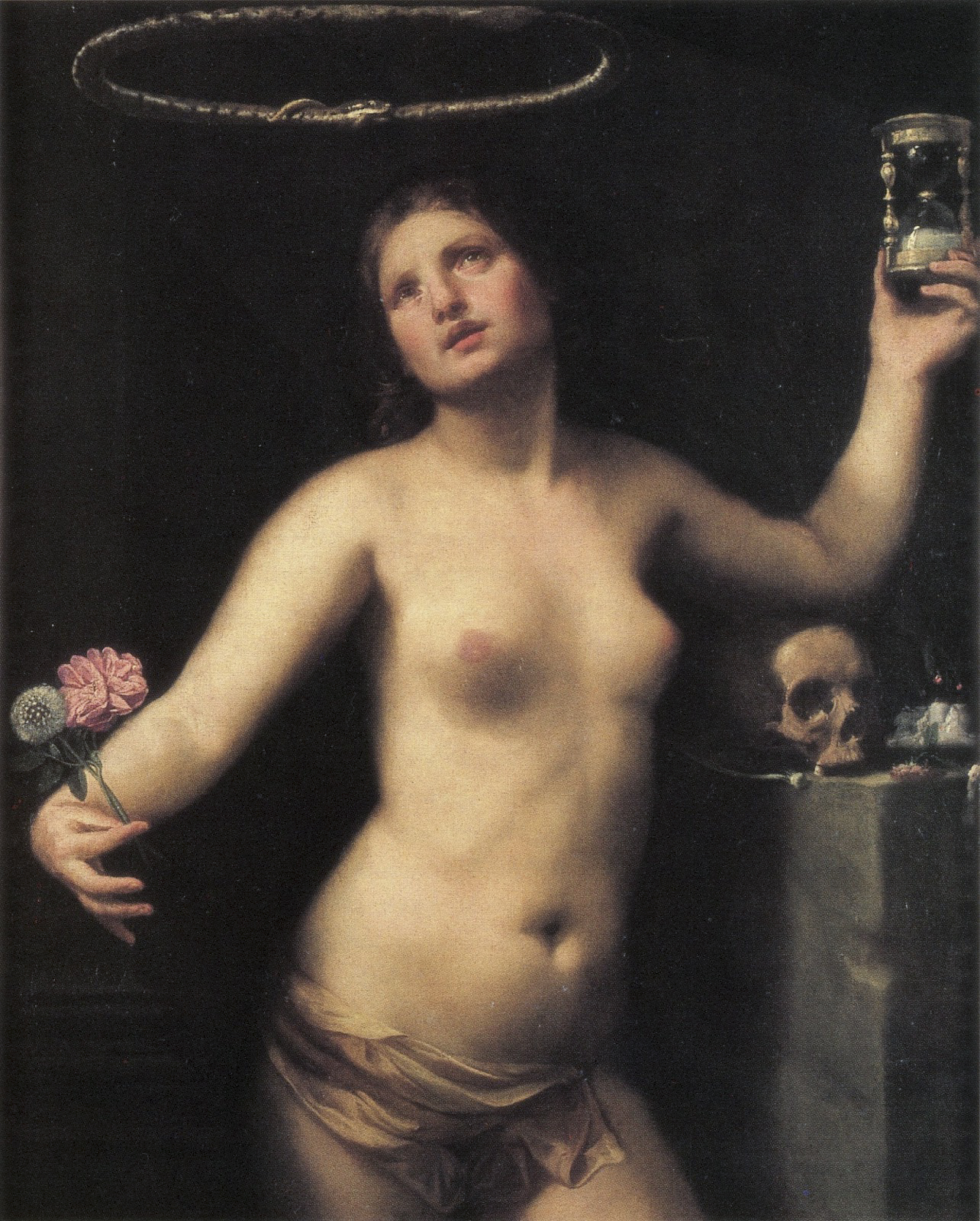
In Italy, it is the day of Garibaldian Unity, il Giorno dell'Unita', but equally doubtlessly the Italians are not feeling like their country is particularly united, and not reveling quite in the same way as the Irish, at least as far as I can tell from friends' Facebook posts today. Having a lot of connections in Ireland and Italy, I think my assumptions are pretty well founded and close to the truth.
Today in Holland, it's a bit cooler than it has been, a no tangible sign of sun yet. But I am happy, calm, ready to face what I must and do my duty. My body and mind are being re-connected through exercise, and I am achieving the goals I set out for myself. I am re-oxygenated, and I can feel it. It feels good.
Figuring out where you fit into this Life isn't always easy, but you can only make "mistakes" insofar as much as you can hone in on what your proper path is; so there are no mistakes as such. Just experiences. Do not be afraid to experiment -- just be ready to change your course if you must, or think your efforts are better directed elsewhere. Change is good -- make it self-directed, inner change, and you really have something special.
I feel ready to change, and ready to get to work. It's fantastic knowing that what you want to do, what you should do, and what you feel good doing are all one and the same. Makes me feel like this chick:
14 March, 2011
Sperm Whales give each other names
Subtle variations in sperm-whale calls suggest that individuals announce themselves with discrete personal identifier. To put it another way, they might have names.
The findings are preliminary, based on observations of just three whales, so talk of names is still speculation. But “it’s very suggestive,” said biologist Luke Rendell of Scotland’s University of St. Andrews. “They seem to make that coda in a way that’s individually distinctive.”
Rendell and his collaborators, including biologists Hal Whitehead, Shane Gero and Tyler Schulz, have for years studied the click sequences, or codas, used by sperm whales to communicate across miles of deep ocean. In a study published last June in Marine Mammal Sciences, they described a sound-analysis technique that linked recorded codas to individual members of a whale family living in the Caribbean.
The findings are preliminary, based on observations of just three whales, so talk of names is still speculation. But “it’s very suggestive,” said biologist Luke Rendell of Scotland’s University of St. Andrews. “They seem to make that coda in a way that’s individually distinctive.”
Rendell and his collaborators, including biologists Hal Whitehead, Shane Gero and Tyler Schulz, have for years studied the click sequences, or codas, used by sperm whales to communicate across miles of deep ocean. In a study published last June in Marine Mammal Sciences, they described a sound-analysis technique that linked recorded codas to individual members of a whale family living in the Caribbean.
12 March, 2011
A re-posting of a 2005 survey of CSR in the Economist
I'm re-posting this article here; it's one of the ones that got me interested in CSR in the first place, and made me realize that there could be problems if it wasn't implemented properly.
It's a really good survey, i.e. a broad overview; I wish they'd update it!!!
It's a really good survey, i.e. a broad overview; I wish they'd update it!!!
Michael Porter's newest Big Idea
Porter wants to move CSR up a notch and introduce his version of it:
"Opinion is divided on Mr Porter’s big new idea. He thinks “shared value” may have at least as big an impact as his earlier work. Many corporate titans echo his sentiments. The bosses of PepsiCo, Nestlé, Prudential (of Britain) and Petrobras expressed enthusiasm about his arguments at the recent Davos summit. However, Larry Summers, a former American Treasury secretary and a colleague of Mr Porter’s at Harvard, was overheard asking “Do you seriously believe this [expletive unrecorded]?”
Mr Porter is right to worry that capitalism is suffering a crisis of legitimacy. The 2007-08 global economic panic has generated widespread worries that the capitalist system is too short-term and too crisis-prone. He is also right that CSR—the boardroom’s favourite response to this crisis of legitimacy—is a tired label. Two of its loudest corporate proponents, Enron and BP, messed up dramatically. Few people outside the public-relations industry can listen to the CSR mantras of “win-win” and “doing well by doing good” without grimacing."
And a comment by Angus:
Oh dear, another business concept book by another big name!
Celebrities get richer while unknowns with originality and authenticity must run the gauntlet of indifference and outright scorn from the orthodox.
When I lost my sense of glamour in being an executive for a big company, I hadn't saved enough to make a big splash as an entrepreneur. So I wandered around in the wilderness for a long time before I regained the confidence, from a different perspective, with which I entered the corporate world with all the "right" credentials. But then one day it hit me: combining individuality with cooperation is essentially a question of balance -- balance in aim and intent and balance in communication. And of course that means "shared value".
Here's how I found the balances I needed to become a reasonably well-paid and very satisfied executive coach while helping entrepreneurs create value for their customers and clients and keep some of it for themselves. They all had a highly-developed sense of service to customers, so all I have had to add is insight in balancing the following disciplines:
Honesty: The discipline of avoiding either falsehood or deception and of being reciprocally open about intents and evolving intentions
balanced with --
Verbal Integrity: The discipline of being true to one’s word, or promptly honourable in warning of exceptions arising because one was unable to anticipate intervening circumstances
Empathy: The discipline of being actively present to understand the needs, wants and interests of others in one’s client, team, prospect, or community and of eliciting or anticipating accurately the sensitivities likely to be excited by one’s desires to share or hide potentially painful or disturbing possibilities or hypotheses with such people
balanced with --
Accuracy: The discipline of caring enough about the communication of data, observations, facts, hypotheses, findings, questions, assertions, requests, and recommendations both to avoid misdirection and to engender mutual trust that the goals of the team/organization are being respected intelligently
Clarity: The discipline of making sure that a message, either outgoing or incoming, has been understood before concluding that a communication cycle is satisfactorily complete
balanced with --
Courage: The discipline of (1) either asserting or forbearing when seemingly idiotic convention supports the opposite, and (2) either accepting responsibility for a job, project, engagement, contract, person, team, organization, or community, or articulating honestly and accurately one’s reasons for declining to accept it – but only after carefully ascertaining that one is doing neither out of either bravado or egotistical desire for acclamation
Discretion: The discipline of making faithfully practical protection, or properly authorized recognition, of the proper ownership of valuable or sensitive information
balanced with --
Coherence: The discipline of (1) searching for, and either eliminating or explaining, the paradoxes underlying one’s own behaviour, assumptions and aims and (2) gently helping others to do the same.
Will Porter's book help? I doubt there's a chance in a zillion it will.
"Opinion is divided on Mr Porter’s big new idea. He thinks “shared value” may have at least as big an impact as his earlier work. Many corporate titans echo his sentiments. The bosses of PepsiCo, Nestlé, Prudential (of Britain) and Petrobras expressed enthusiasm about his arguments at the recent Davos summit. However, Larry Summers, a former American Treasury secretary and a colleague of Mr Porter’s at Harvard, was overheard asking “Do you seriously believe this [expletive unrecorded]?”
Mr Porter is right to worry that capitalism is suffering a crisis of legitimacy. The 2007-08 global economic panic has generated widespread worries that the capitalist system is too short-term and too crisis-prone. He is also right that CSR—the boardroom’s favourite response to this crisis of legitimacy—is a tired label. Two of its loudest corporate proponents, Enron and BP, messed up dramatically. Few people outside the public-relations industry can listen to the CSR mantras of “win-win” and “doing well by doing good” without grimacing."
And a comment by Angus:
Oh dear, another business concept book by another big name!
Celebrities get richer while unknowns with originality and authenticity must run the gauntlet of indifference and outright scorn from the orthodox.
When I lost my sense of glamour in being an executive for a big company, I hadn't saved enough to make a big splash as an entrepreneur. So I wandered around in the wilderness for a long time before I regained the confidence, from a different perspective, with which I entered the corporate world with all the "right" credentials. But then one day it hit me: combining individuality with cooperation is essentially a question of balance -- balance in aim and intent and balance in communication. And of course that means "shared value".
Here's how I found the balances I needed to become a reasonably well-paid and very satisfied executive coach while helping entrepreneurs create value for their customers and clients and keep some of it for themselves. They all had a highly-developed sense of service to customers, so all I have had to add is insight in balancing the following disciplines:
Honesty: The discipline of avoiding either falsehood or deception and of being reciprocally open about intents and evolving intentions
balanced with --
Verbal Integrity: The discipline of being true to one’s word, or promptly honourable in warning of exceptions arising because one was unable to anticipate intervening circumstances
Empathy: The discipline of being actively present to understand the needs, wants and interests of others in one’s client, team, prospect, or community and of eliciting or anticipating accurately the sensitivities likely to be excited by one’s desires to share or hide potentially painful or disturbing possibilities or hypotheses with such people
balanced with --
Accuracy: The discipline of caring enough about the communication of data, observations, facts, hypotheses, findings, questions, assertions, requests, and recommendations both to avoid misdirection and to engender mutual trust that the goals of the team/organization are being respected intelligently
Clarity: The discipline of making sure that a message, either outgoing or incoming, has been understood before concluding that a communication cycle is satisfactorily complete
balanced with --
Courage: The discipline of (1) either asserting or forbearing when seemingly idiotic convention supports the opposite, and (2) either accepting responsibility for a job, project, engagement, contract, person, team, organization, or community, or articulating honestly and accurately one’s reasons for declining to accept it – but only after carefully ascertaining that one is doing neither out of either bravado or egotistical desire for acclamation
Discretion: The discipline of making faithfully practical protection, or properly authorized recognition, of the proper ownership of valuable or sensitive information
balanced with --
Coherence: The discipline of (1) searching for, and either eliminating or explaining, the paradoxes underlying one’s own behaviour, assumptions and aims and (2) gently helping others to do the same.
Will Porter's book help? I doubt there's a chance in a zillion it will.
10 March, 2011
And the Dalai Lama retired today... Tensin
Tensin Gyatso, we will miss you. You really politicized your role furthur than you had to, and you fought for your people and for what you think is right and just and wise.
Don't stop now!!! Go to China, work with them, they will respect you and they need your help. Go talk to the Chinese Communist Party, and try to help them see reason. They are smart, pragmatic and reasonable -- to a certain extent. But they can learn. And you are the Greatest Teacher!!!
Namaste,
Karuna
Don't stop now!!! Go to China, work with them, they will respect you and they need your help. Go talk to the Chinese Communist Party, and try to help them see reason. They are smart, pragmatic and reasonable -- to a certain extent. But they can learn. And you are the Greatest Teacher!!!
Namaste,
Karuna
Military Ranking Defence Budgets
Saudis on top, no surprise there. But will they be able to keep up with the technology race? If they throw enough money at it... maybe. But will the money they have be worth anything?
The Poverty of Dictatorship
This is such an amazing article I have to re-post it. It's kind of stating the obvious, but I guess that's what speaking out is all about.
Dani sounds like an interesting guy: Dani Rodrik, Professor of International Political Economy at Harvard University, is the author of The Globalization Paradox: Democracy and the Future of the World Economy.
I wanna read that book!!!!!!
Dani sounds like an interesting guy: Dani Rodrik, Professor of International Political Economy at Harvard University, is the author of The Globalization Paradox: Democracy and the Future of the World Economy.
I wanna read that book!!!!!!
Stephen Roach on China's next 5-Year Plan
I love 5-year plans. I think everyone should have one. Whether or not you manage to stick to it is secondary. The important thing is to have a long-term goal, and to be working towards it. I'm in my second year of my second 5-year plan, and things are going swimmingly. Life without direction is boring, and quite possibly meaningless... or should I say less meaningful than a life with direction. There.
Soon China will be revealing and embarking upon the next chapter in its complex story. I await with typically baited breath, and hope that there is left a space for me somewhere in that tightly-packed firecracker of a country.
I swear, I will learn Mandarin one day and learn to speak it better than I do Italian.
Soon China will be revealing and embarking upon the next chapter in its complex story. I await with typically baited breath, and hope that there is left a space for me somewhere in that tightly-packed firecracker of a country.
I swear, I will learn Mandarin one day and learn to speak it better than I do Italian.
Thank you Roland, thanks Economist, you are back in my good books
I got a lot of presents in my Facebook feed this morning, some of which courtesey of the Economist, ever the bearer of news (I almost wrote "good" before "news", close one).
I saw the Killing Fields on video when it came out, when I was about 13 years old, and it made such a big impression on me, that for the next 7 years I wanted to be a journalist and reveal to the world the atrocities perpetrated by those like Pol Pot, and hopefully help his victims find justice.
I was disillusioned with the journalism industry by the time I got to Ryerson U. for J-School. But I've never stopped being astounded by the people who lived through Pol Pot's version of hell. How did they do that? The resilience of the human spirit will never cease to amaze me.
Thank you Roland for having this idea. I hope we get to see the Playing Fields -- playing is so much better than killing.
Thanks, Economist, for printing that article. It reminded me of who we all are. It made my day. There is definitely a lot of hope for us.
I saw the Killing Fields on video when it came out, when I was about 13 years old, and it made such a big impression on me, that for the next 7 years I wanted to be a journalist and reveal to the world the atrocities perpetrated by those like Pol Pot, and hopefully help his victims find justice.
I was disillusioned with the journalism industry by the time I got to Ryerson U. for J-School. But I've never stopped being astounded by the people who lived through Pol Pot's version of hell. How did they do that? The resilience of the human spirit will never cease to amaze me.
Thank you Roland for having this idea. I hope we get to see the Playing Fields -- playing is so much better than killing.
Thanks, Economist, for printing that article. It reminded me of who we all are. It made my day. There is definitely a lot of hope for us.
Subscribe to:
Posts (Atom)